

wcag 2.2 recap
WCAG 2.2, released in late 2023, brought significant updates to the Web Content Accessibility Guidelines. It wasn’t a complete overhaul, but a focused expansion of existing criteria to address emerging web technologies and user needs. Many of the changes centered around making the web more usable for people with disabilities, covering areas previously not explicitly addressed.
WCAG 2.2 introduced specific criteria for accessible authentication, simplifying login flows for people using assistive tech. It also tightened rules for focus indicators so keyboard users don't lose their place. Right now, 2.2 is the active standard most teams are aiming for.
Essentially, 2.2 built upon the strong foundation of 2.1, clarifying ambiguities and adding specificity where it was needed. It’s not enough to simply be aware of the guidelines; developers need to actively implement them. Resources like those available on section508.gov can provide a solid starting point for understanding the requirements and best practices.

changes coming in wcag 2.3
WCAG 2.3, currently in the final review stage as of November 2024, proposes further refinements and additions to the guidelines. While still not officially finalized, the draft criteria offer a clear direction for accessible web design in 2026 and beyond. The proposed changes are significant, particularly in areas like accessible learning content and more detailed guidance on interactions.
One key area of focus is new Success Criteria for accessible learning content. This acknowledges the growing importance of online education and the need to ensure that educational materials are usable by everyone, regardless of disability. Another significant update involves more precise guidance for drag-and-drop interactions, a notoriously difficult area for accessibility. This aims to reduce ambiguity and provide developers with clearer direction.
These aren’t just minor tweaks. They represent a conscious effort to address emerging accessibility challenges and create a more inclusive web. It’s crucial for developers to start familiarizing themselves with these proposed changes now, even before they are officially adopted. The impact will be felt across a wide range of web applications, from simple websites to complex web applications.
The Working Group anticipates finalizing WCAG 2.3 in early 2026. While the timeline is subject to change, developers should plan for a transition period to adopt the new guidelines. Ignoring these updates isn't an option; accessibility is increasingly becoming a legal and ethical imperative.
new requirements for focus indicators
Both WCAG 2.2 and 2.3 emphasize the importance of clear and visible focus indicators, but 2.3 refines the requirements. The core principle remains the same: keyboard users must be able to easily identify which element currently has focus. However, 2.3 provides more specific guidance on what constitutes sufficient contrast and acceptable designs for custom controls.
A common pitfall is using focus indicators that are too subtle or blend in with the background. WCAG 2.3 aims to address this by providing clearer examples of acceptable contrast ratios and visual styles. The updated guidelines also offer more guidance on how to handle focus indicators in complex user interfaces, such as those using JavaScript frameworks.
For front-end developers, this means paying close attention to CSS styling and ensuring that focus states are clearly defined and visually distinct. It’s not enough to simply add a basic outline; the focus indicator should be meaningful and easily discernible by users with low vision or other visual impairments. Testing with keyboard navigation and screen readers is essential to ensure compliance.
- Maintain a contrast ratio of at least 3:1 for focus indicators against adjacent colors.
- Use a clear visual style: Avoid subtle indicators that may be difficult to see.
- Test with keyboard navigation: Verify that focus indicators are visible and functional during keyboard-only interaction.
accessible drag-and-drop
Accessible drag-and-drop interactions have historically been a challenge for web developers. WCAG 2.3 provides more specific guidance to address these difficulties. Previously, the guidelines were somewhat vague, leaving developers to interpret how to make these interactions accessible. The new criteria offer clearer direction.
The recommended approach involves using ARIA attributes to provide semantic information about the drag-and-drop operation to assistive technologies. This includes defining roles, states, and properties that describe the draggable element, the drop zone, and the current state of the drag operation. Providing keyboard alternatives is also crucial, allowing users to perform the same actions without relying on a mouse.
Screen readers have to announce when a drag starts, where the valid drop zones are, and when the action finishes. Complex scenarios with nested zones are still tricky to implement, but the requirement stays the same: you need semantic labels, keyboard shortcuts, and live region updates.
The goal is to ensure that users who cannot use a mouse can still fully participate in drag-and-drop interactions. This requires careful planning and implementation, but it’s essential for creating a truly inclusive web experience. Tools like axe DevTools can help identify potential accessibility issues in drag-and-drop interactions.
Accessible Learning Content: New Ground
WCAG 2.3 introduces new Success Criteria specifically addressing the accessibility of learning materials. This is a significant development, reflecting the growing importance of online education and the need to ensure that all learners have equal access to educational opportunities. This isn't merely about making content readable; it's about ensuring interactive elements are usable by everyone.
The new guidelines cover a range of learning materials, including quizzes, interactive simulations, and educational videos. For quizzes, the focus is on providing accessible alternatives for visual or auditory questions and ensuring that answer options are clearly labeled and navigable. Interactive simulations need to be keyboard accessible and provide alternative input methods.
Educational videos must include accurate captions, transcripts, and audio descriptions. This is particularly important for learners with hearing or visual impairments. Edtech companies and anyone creating online courses will need to pay close attention to these new requirements to ensure compliance. Resources from Savy Assist can help with evaluating the accessibility of learning content.
- Include accurate captions and transcripts for all video and audio content.
- Keyboard Accessibility: Ensure all interactive elements are keyboard accessible.
- Alternative Input Methods: Offer alternative input methods for users who cannot use a mouse.
Accessibility Method Comparison for Learning Content
| Method | Cost | Complexity | Screen Reader Support | Cognitive Load |
|---|---|---|---|---|
| Captions | Generally Lower | Moderate | Excellent | Lower - supports multiple learning styles |
| Transcripts | Moderate | Moderate | Good - requires conversion for full benefit | Moderate - requires reading |
| Audio Descriptions | Higher | Higher | Excellent - when implemented correctly | Moderate - adds information without disrupting core content |
| Alternative Text | Lower | Low | Essential - provides context for images | Lower - concise and focused information |
| Keyboard Navigation | Lower | Moderate to High - depending on existing site structure | Essential - allows access without a mouse | Moderate - requires learning keyboard commands |
Qualitative comparison based on the article research brief. Confirm current product details in the official docs before making implementation choices.
Authentication Updates: Security and Access
WCAG 2.2 already made strides in accessible authentication, but 2.3 builds upon that foundation. Accessible authentication is crucial because it ensures that users with disabilities can securely access online accounts and services. The updated guidelines address several key areas, including accessible CAPTCHAs, multi-factor authentication, and password recovery processes.
Accessible CAPTCHAs are a particularly challenging area. Traditional CAPTCHAs often rely on visual or auditory cues that are inaccessible to users with certain disabilities. WCAG 2.3 encourages the use of alternative authentication methods, such as multi-factor authentication or biometric authentication, that are more accessible. If CAPTCHAs are necessary, they must provide accessible alternatives.
Multi-factor authentication should also be accessible, allowing users to complete the process using assistive technologies. Password recovery processes must be equally accessible, providing clear instructions and alternative methods for verifying identity. Security-focused developers need to prioritize accessibility throughout the authentication process.
Preparing for 2026: A Timeline
With WCAG 2.3 anticipated to be finalized in early 2026, developers should start preparing now. A realistic timeline for adopting the new guidelines should include several key milestones. First, familiarize yourself with the proposed changes. Review the draft criteria and understand the impact on your projects.
Next, update your accessibility documentation to reflect the new requirements. This will help ensure that your team is aware of the changes and can implement them correctly. Provide accessibility training to your development teams, focusing on the new Success Criteria and best practices.
Conduct accessibility audits of your existing websites and applications to identify potential compliance gaps. Prioritize remediation efforts based on the severity of the issues and the impact on users. Finally, establish a continuous accessibility monitoring process to ensure ongoing compliance. This is not a one-time fix, but an ongoing commitment to inclusivity.
- Late 2024 - Early 2025: Familiarize yourself with the proposed changes in WCAG 2.3.
- Mid 2025: Update accessibility documentation and provide team training.
- Late 2025 - Early 2026: Conduct accessibility audits and begin remediation efforts.
- 2026 Onward: Implement continuous accessibility monitoring and maintenance.
Featured Products
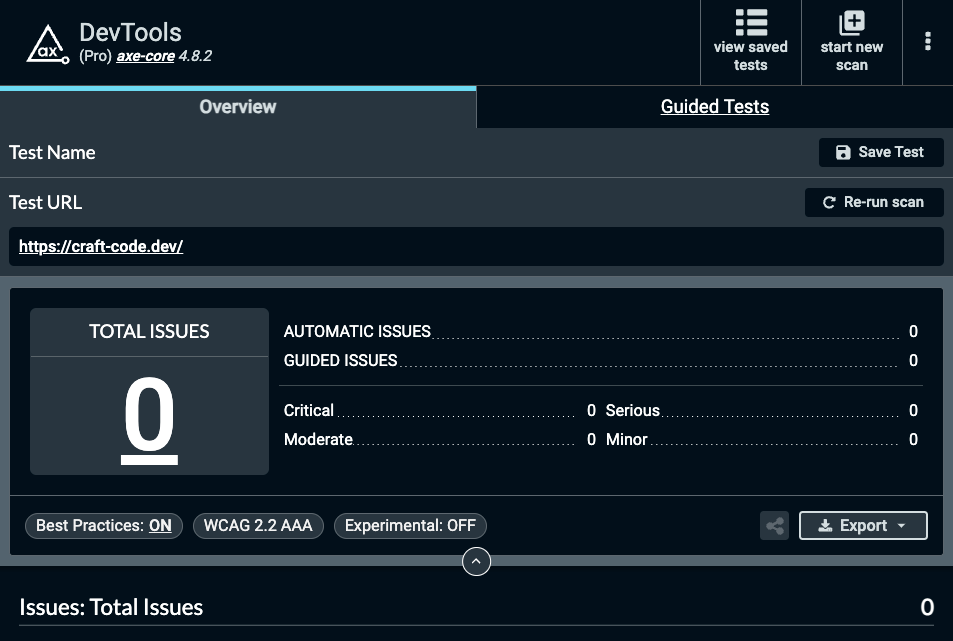
Automated accessibility testing · Guided manual testing · Accessibility issue tracking and reporting
axe DevTools Pro offers comprehensive automated and guided manual testing to identify and fix accessibility issues, ensuring compliance with WCAG standards.

Step-by-step JAWS screen reader instructions · Covers Windows, web, and general computer use · Designed for blind and visually impaired users
Mastering JAWS Screen Reader provides essential training for developers to understand and test web content with a leading screen reader, crucial for accessibility.
![Dragon Professional 16.0 Speech Dictation and Voice Recognition Software [PC Download]](https://m.media-amazon.com/images/I/71wQ93kHkxL._AC_UY654_QL65_.jpg)
Advanced speech recognition for dictation · Voice control for computer navigation · Customizable vocabulary and commands
Dragon Professional 16.0 enables developers to efficiently create and test content using voice commands, supporting diverse input methods for accessibility.

Integrated touchpad for cursor control · Dedicated media playback keys · Wireless connectivity for HTPCs and smart TVs
The Logitech K400 Plus offers a convenient all-in-one input solution for testing web content on various devices, including those controlled by users with motor impairments.
Visual accessibility checker · Identifies WCAG errors and alerts · Browser extension for real-time feedback
The WAVE Web Accessibility Evaluation Tool provides a visual representation of accessibility issues, allowing developers to quickly identify and address problems on their websites.
As an Amazon Associate I earn from qualifying purchases. Prices may vary.


No comments yet. Be the first to share your thoughts!