

The state of AR glasses today
Augmented reality smart glasses are no longer science fiction; they’re a developing assistive technology for people with visual impairments, and the capabilities are growing quickly. Currently, these devices aren’t about restoring vision, but about providing supplemental information about the world around the user. Think of them as a smart assistant for your eyes. The technology relies on a combination of components working together to create a usable experience.
At the heart of these glasses is object recognition, powered by artificial intelligence. This allows the glasses to identify objects in the user's field of view. Scene understanding builds on this, interpreting the relationships between objects and providing context. Spatial audio is also critical, delivering directional sound cues to help users locate objects or navigate their surroundings. Finally, text-to-speech technology converts visual information into audible output, allowing users to "hear’ what the glasses ‘see."
It’s important to understand that the AR glasses available today are still relatively bulky and have limitations. Battery life is often a concern, and processing power can be a bottleneck. However, the core technology is functional and improving rapidly. The SEVA glasses, demonstrated at Sight Village London in February 2025, are a good example of current capabilities, offering real-time object recognition and text-to-speech outputs – though they still require a connected smartphone for processing.
How object recognition works
Object recognition is the foundation of most AR smart glasses for visual impairments. The accuracy of this feature directly impacts the usefulness of the device. Current systems are getting surprisingly good at identifying common objects – people, cars, doors, traffic lights – but challenges remain. Accuracy varies depending on factors like lighting conditions, the angle of the object, and whether it’s partially obscured.
Occlusion is a significant problem. If an object is partially hidden behind another, the glasses may struggle to identify it. Low-light conditions also reduce accuracy. While AI models, like those based on the YOLO (You Only Look Once) architecture, have drastically improved object detection speeds, they aren’t perfect. The ACM SIGACCESS report highlights that consistent, reliable performance in real-world scenarios is still a work in progress.
The range at which objects can be reliably identified is also limited. Most current systems perform best at close to medium range – within a few meters. Beyond that, accuracy drops off significantly. It’s not simply about the camera’s resolution; it’s about the AI’s ability to process the visual data and correctly classify the object. We’re seeing progress, but a fully robust system that can accurately identify any object in any condition is still some years away.
What to expect in 2026
By 2026, the biggest shift will be in processing. We are moving toward edge computing, where the glasses handle AI calculations themselves instead of offloading them to a phone. This cuts the lag that makes current devices feel slow. New chips are coming out that prioritize this specific kind of mobile power.
Battery life remains a major hurdle, but we can expect to see improvements there as well. New battery technologies and more efficient software algorithms will help extend the time between charges. The FDA is also paying attention to these devices, recognizing their potential in medical applications, and this regulatory focus will likely drive innovation in safety and efficacy. The FDA’s documentation suggests increased scrutiny around data privacy and security.
Form factor is another area ripe for improvement. Current AR glasses tend to be bulky and conspicuous. By 2026, we’ll likely see more discreet designs that resemble regular eyeglasses. This will require miniaturization of components and innovative optical solutions. Object recognition itself will become more sophisticated, capable of identifying a wider range of objects with greater accuracy, even in challenging conditions. Expect to see better performance with smaller, more distant, or partially obscured objects.
Moving beyond simple labels
Simply identifying objects isn’t enough for true navigational assistance. AR glasses need to understand the context of those objects. Knowing there’s a bus stop is helpful, but knowing when the bus is arriving, which direction it's traveling, and how far away it is, is far more useful. This requires integrating multiple data sources and sophisticated AI algorithms.
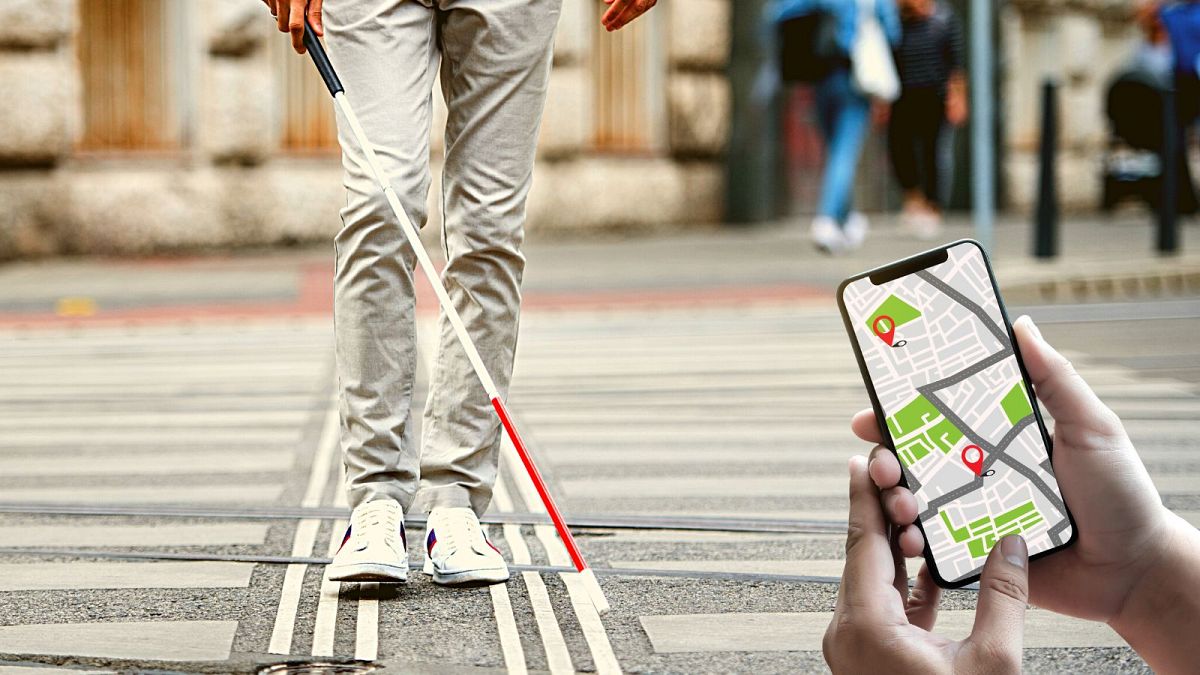
GPS is a fundamental component, providing location information. However, GPS accuracy can be limited, especially in urban canyons or indoors. LiDAR (Light Detection and Ranging) sensors, which create detailed 3D maps of the environment, can supplement GPS and provide more precise positional data. Real-time data feeds – such as bus schedules, traffic updates, and pedestrian crossing signals – are also essential. The glasses need to be able to process this information and present it to the user in a clear and intuitive way.
Imagine the glasses alerting you to an upcoming curb, guiding you around an obstacle, or announcing the arrival of your bus. This level of assistance requires a system that can not only see the world but also understand it. The ACM SIGACCESS report emphasizes the importance of multimodal feedback – combining visual, auditory, and haptic cues – to create a truly immersive and informative experience.
Reading Assistance: Text in the Real World
A significant benefit of AR smart glasses is their ability to assist with reading text in the environment. Menus, signs, labels, and documents can all be made accessible to people with visual impairments. However, this is a surprisingly complex task. Different fonts, lighting conditions, and languages all present challenges.
Optical Character Recognition (OCR) technology is used to convert images of text into machine-readable text. OCR has improved dramatically in recent years, but it’s still not perfect. Poor lighting, distorted text, or unusual fonts can all lead to errors. The glasses need to be able to adapt to these variations and accurately recognize the text. Some systems allow users to adjust settings to optimize OCR performance for specific conditions.
Furthermore, the ability to translate text in real-time is a valuable feature. Imagine pointing the glasses at a foreign language menu and having it instantly translated into your native language. This requires integration with machine translation services and a robust text-to-speech engine. Improving OCR accuracy and expanding language support are key areas of focus for developers.
Current models on the market
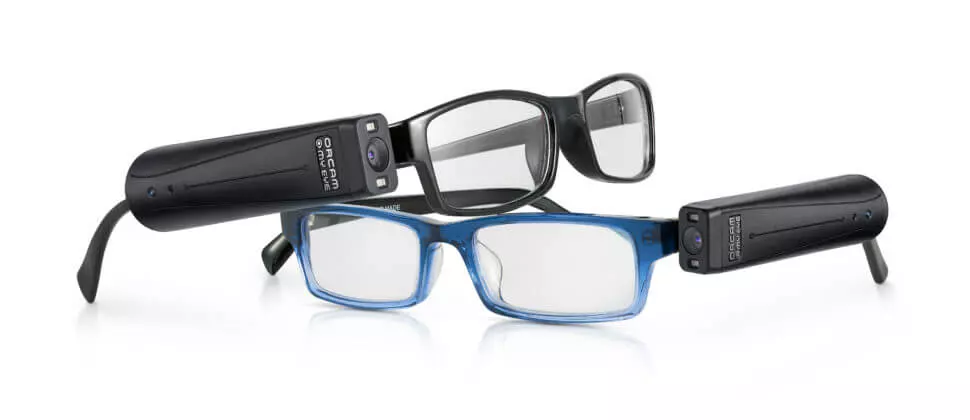
Several AR smart glasses with accessibility features are currently available, though options are still limited. The OrCam Myo, while not traditional glasses, is a wearable device that attaches magnetically and uses hand gestures to read text and identify objects. It’s priced around $2,500 and targets users who need assistance with reading and object recognition. It doesn’t offer the full AR experience of overlaying information onto the user’s field of view, but it’s a functional and popular option.
The SEVA glasses, showcased at Sight Village London, are a more traditional AR glasses design. They require a connected smartphone for processing but offer real-time object recognition and text-to-speech output. Exact pricing varies depending on configuration, but typically starts around $1,800. They are designed to be a more versatile assistive device, supporting a wider range of tasks.
North Focals, while discontinued as a product line, represented an early attempt at stylish AR glasses. While no longer actively sold, the technology and lessons learned from North Focals continue to influence the development of other AR glasses. Aira offers a subscription-based service that connects users with remote human agents who can provide visual assistance through AR glasses. This isn’t a fully autonomous solution, but it can be helpful for complex tasks or situations. Subscriptions start around $299 per month.
- The OrCam Myo costs $2,500 and uses hand gestures to trigger its reading and recognition features.
- SEVA Glasses: $1,800+, real-time AR assistance (requires smartphone).
- Aira: $299+/month, remote human assistance via AR glasses.
Featured Products

Wearable AI device with voice, gesture, and touch control · Reads text from any surface · AI-powered assistive capabilities
The OrCam MyEye 2 Pro offers advanced AI to read text and recognize objects, providing significant assistance for those with visual impairments.

12 MP ultra-wide camera for photo and video capture · Open-ear speakers for audio playback and calls · Bluetooth connectivity
The Ray-Ban Meta (Gen 1) integrates a camera and audio into stylish eyewear, offering a foundational smart glasses experience.

2x battery life compared to previous generation · 3K HD resolution display · 12 MP ultra-wide camera for photo and video capture
The Ray-Ban Meta (Gen 2) enhances the smart glasses experience with improved battery life and higher resolution display, alongside its camera and audio features.

Full-HD (1920x1080) resolution organic EL display · Wide field of view · Lightweight and comfortable design
The Epson MOVERIO BT-40 provides a high-resolution, immersive visual experience suitable for various applications, including assistive technology.
As an Amazon Associate I earn from qualifying purchases. Prices may vary.
Privacy and Security Considerations
AR smart glasses collect a significant amount of data about the user and their surroundings. This raises important privacy and security concerns. The glasses are constantly recording video and audio, and this data could potentially be misused. It’s crucial to understand what data is being collected, how it’s being used, and who has access to it.
Robust security measures are essential to protect user data from unauthorized access. This includes encryption, secure data storage, and strict access controls. Users should also have control over their data, including the ability to opt-out of data collection and delete their data. Transparency is key – companies need to be upfront about their data practices and provide users with clear and concise privacy policies.
No comments yet. Be the first to share your thoughts!