
The shift toward contextual understanding
Screen readers are finally moving past the rigid, linear reading patterns that have frustrated users for decades. While older tools often get stuck on complex web grids or dynamic menus, 2026 marks a shift toward software that actually interprets a page's layout rather than just reciting its code.
The core issue has always been understanding. Previous screen readers primarily focused on the technical structure of a webpage, reading content linearly. They could identify headings and links, but often lacked the ability to grasp the context or intent behind the information. AI, particularly large language models, changes this fundamentally. These models allow screen readers to 'understand' the meaning of content, leading to a far more natural and intuitive experience.
This isn’t just about incremental improvements; it’s about fundamentally changing how people with visual impairments interact with the digital world. We’re moving beyond simply accessing information to truly comprehending it. The following sections will explore the key players and emerging features that are defining this new era of AI-powered screen readers.
NVDA and OpenAI integration
NVDA, the popular open-source screen reader, has become a frontrunner in AI integration thanks to its partnership with OpenAI. By incorporating GPT models, NVDA is gaining a remarkable ability to interpret complex web elements and provide a smoother, more natural user experience. This integration isn’t simply about adding a chatbot feature; it’s about fundamentally enhancing how NVDA processes and presents information.
One significant improvement lies in handling tables. Traditionally, screen readers have struggled to navigate and explain the relationships within tables. With GPT, NVDA can now analyze the table structure and provide a concise, human-readable summary of the data. Similarly, ambiguous links – those frustratingly vague phrases like 'click here' – are now interpreted based on the surrounding context, giving users a clearer understanding of where the link will take them.
The benefits extend to form completion and error handling. GPT can analyze form fields and provide intelligent suggestions, reducing the cognitive load on the user. When errors occur, the explanations are more detailed and helpful, guiding the user towards a solution. This integration is constantly evolving, with NVDA developers actively exploring new ways to leverage OpenAI’s capabilities. You can find more information on the NVDA website and community forums.
This integration requires an active internet connection because the GPT models run in the cloud. While this adds latency compared to local processing, the jump in accuracy when describing complex data tables makes the trade-off practical for most daily browsing.
JAWS and semantic web structure
Freedom Scientific, the creators of JAWS, are taking a different but equally compelling approach to AI integration. Their focus is on semantic understanding – teaching JAWS to "understand" the meaning of content, rather than just reading it linearly. This involves leveraging AI to analyze the underlying structure and relationships within a webpage.
A key component of this strategy is improved handling of ARIA attributes. ARIA (Accessible Rich Internet Applications) provides a way for developers to add semantic information to web content, making it more accessible to screen readers. JAWS’ AI enhancements allow it to better interpret and utilize these attributes, providing a more accurate and informative experience. This is particularly important for dynamically updating web pages, where content changes frequently.
JAWS’ approach differs from NVDA’s GPT integration in that it emphasizes local processing and a deeper understanding of web standards. While NVDA relies heavily on cloud-based AI, JAWS aims to build intelligence directly into the screen reader itself. Both strategies have their merits, and the competition between them is likely to drive further innovation in the field.
Orca’s specialized machine learning
Orca, the screen reader developed by the University of Washington, presents a unique approach centered around machine learning models specifically trained for accessibility. Unlike NVDA’s reliance on general-purpose language models like GPT, Orca focuses on building models tailored to the specific needs of screen reader users. This allows for greater control and customization.
Orca learns from user interactions, adapting to individual preferences and needs over time. This personalization is a significant advantage, as it allows the screen reader to become more efficient and effective for each user. Its integration with VS Code is particularly noteworthy, providing a seamless development experience for visually impaired programmers. There’s also potential for wider IDE support in the future.
Being open-source is central to Orca’s development. This allows researchers and developers worldwide to contribute to the project, fostering innovation and ensuring that the screen reader remains accessible and adaptable. However, open-source projects often rely on community contributions, which can sometimes lead to slower development cycles compared to commercial products. Still, the potential for customization and collaboration is immense.
Beyond the Big Three: Emerging AI Screen Readers
While NVDA, JAWS, and Orca dominate the market, several other AI-powered screen readers are worth exploring. eSpeak NG, a compact, open-source speech synthesizer, is increasingly being enhanced with AI capabilities, offering a lightweight and customizable option. It’s often favored by users who require a minimal footprint or who want to experiment with different AI models.
Other emerging players are focusing on niche markets. Some are developing screen readers specifically for educational purposes, while others are targeting users with cognitive disabilities. These smaller projects often demonstrate innovative approaches to accessibility, pushing the boundaries of what’s possible. It’s too early to predict which of these alternatives will gain widespread adoption, but they represent a promising trend towards greater diversity and innovation.
Keep an eye on projects exploring AI-powered image recognition and scene description. These features can provide valuable context for visually impaired users, allowing them to better understand the visual world around them. The integration of AI into screen readers is still in its early stages, and we can expect to see even more innovative solutions emerge in the coming years.
Essential Accessories for Enhanced Screen Reader Experience

Horizontal layout for easy learning · Includes raised dots for numbers and punctuation · Designed as a teaching aid for beginners and blind children
This Braille alphabet board provides essential tactile learning for users to complement screen reader technology.

Split, curved keyframe promotes natural wrist and forearm posture · Integrated, cushioned palm rest for comfort · Connects via Bluetooth or Logi Bolt USB receiver
The ergonomic design of this keyboard reduces strain during extended use, enhancing comfort when paired with screen readers.

27-inch 4K UHD resolution for sharp visuals · IPS Black technology for superior contrast and color depth · Extensive connectivity options including USB-C
This monitor offers exceptional visual clarity and color accuracy, beneficial for users who may also rely on visual cues alongside screen readers.

Immersive Spatial Audio for a more engaging listening experience · World-class noise cancellation technology · Up to 24 hours of playtime on a single charge
These headphones deliver superior audio quality and noise cancellation, creating an immersive soundscape for screen reader output.

Vertical design promotes a natural handshake posture · Quiet clicks for distraction-free use · Connects wirelessly via Bluetooth or Logi Bolt USB receiver
The vertical ergonomic mouse reduces wrist and arm strain, contributing to a more comfortable and sustainable computing experience with screen readers.
As an Amazon Associate I earn from qualifying purchases. Prices may vary.
AI and Mobile Accessibility: VoiceOver & TalkBack
Apple and Google are also leveraging AI to improve the accessibility of their mobile operating systems. VoiceOver (iOS) and TalkBack (Android) are both receiving significant enhancements, including smart summaries, improved image recognition, and contextual help. For example, VoiceOver can now automatically summarize the content of images, providing a description for visually impaired users.
Google’s TalkBack is incorporating AI to improve the accuracy of text recognition and to provide more intelligent suggestions for navigating the interface. Both platforms are also working on features that can detect and describe objects in the real world using the device's camera. These advancements are making mobile apps more accessible than ever before.
However, challenges remain. Many mobile apps are still not designed with accessibility in mind, and even with AI assistance, navigating these apps can be frustrating. Ensuring that developers prioritize accessibility is crucial for creating a truly inclusive mobile experience. The differences in AI implementation between iOS and Android are also noticeable, with Apple often emphasizing privacy and on-device processing, while Google relies more on cloud-based AI.
Personalization and translation trends
Developers are now testing models that adjust speech cadence based on the content type—slowing down for technical documentation and speeding up for social media feeds. Real-time translation is also moving on-device, which helps maintain privacy while browsing foreign language sites.
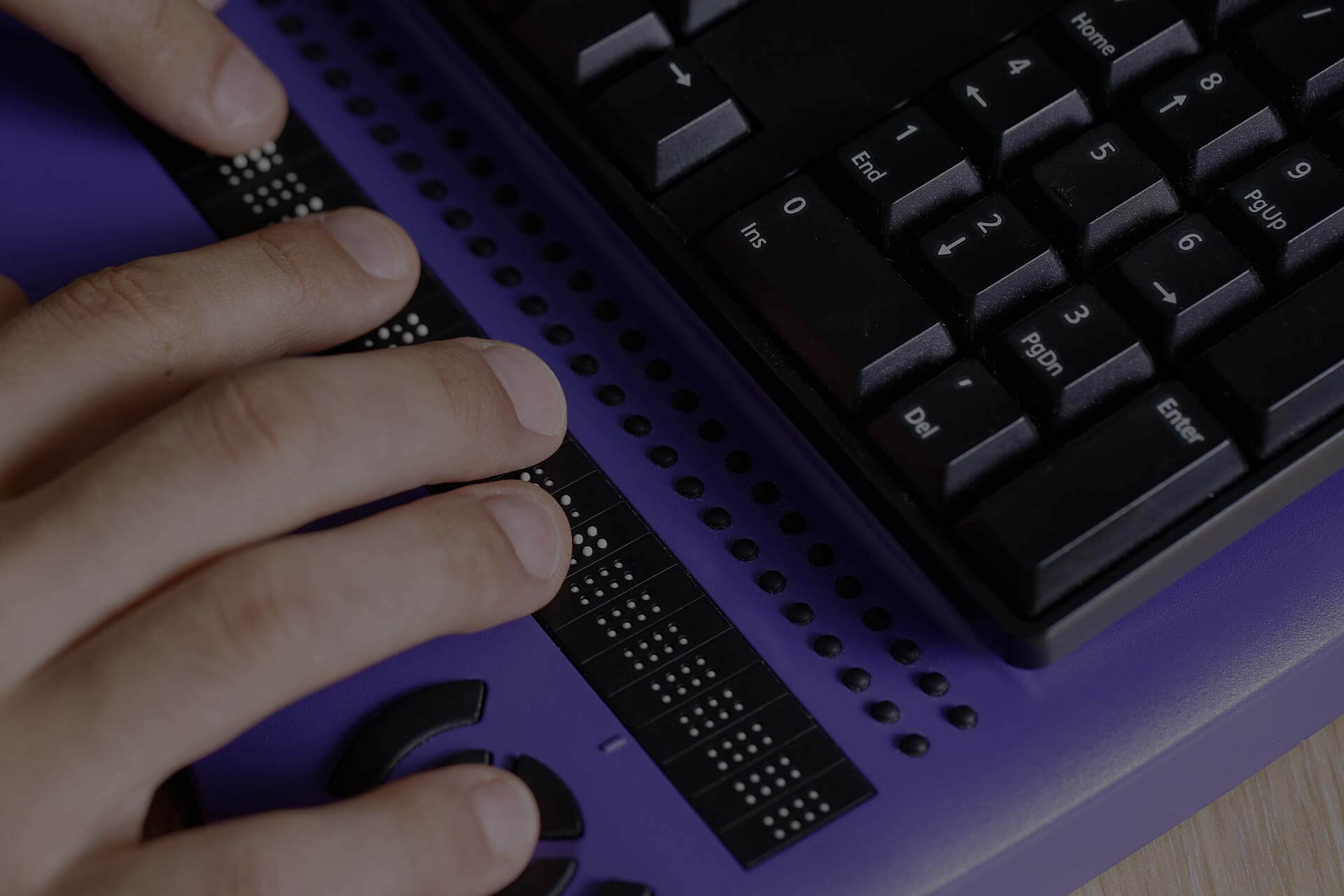
Seamless integration with other assistive technologies is another key trend. AI screen readers will likely work more closely with braille displays, refreshable tactile graphics, and other devices, creating a more holistic accessibility experience. The integration of virtual and augmented reality will also open up new possibilities for visually impaired users.
However, we must also address the ethical considerations surrounding AI in accessibility. Data privacy is a major concern, as screen readers collect a wealth of information about user behavior. Algorithmic bias is another potential issue, as AI models can perpetuate existing inequalities. User feedback will be essential in shaping the future of AI screen readers, ensuring that they are developed and deployed responsibly.

No comments yet. Be the first to share your thoughts!